



Golang Frameworks
Golang frameworks help developers build APIs, web services, backends, and infrastructure-oriented applications with more speed and structure on top of the Go ecosystem. From lightweight HTTP frameworks and routing systems to opinionated web stacks, service frameworks, and developer tooling around Go applications, these frameworks influence how teams balance simplicity, performance, and productivity. Whether you are building APIs, internal services, cloud-native apps, or backend-heavy products, the right Go framework can shape how cleanly the system grows.
Trending Backend Repositories
just now- #1King of the HillBackendC++
RepoRank Score
82
#1King of the HillBackendC++ggml-org/llama.cppggml-orgllamacpp
Developeramuqeetk1LLM inference in C/C++
120,524GitHub stars0boosts (24h)+144stars (24h)RepoRank Score
82
- #2BackendC
RepoRank Score
70
#2BackendCantirez/ds4antirezds4
Developeramuqeetk1DeepSeek 4 Flash local inference engine for Metal
18,625GitHub stars0boosts (24h)+70stars (24h)RepoRank Score
70
- #3BackendC#
RepoRank Score
39
#3BackendC#jellyfin/jellyfinjellyfinjellyfin
DeveloperJellyfinThe Free Software Media System - Server Backend & API
54,311GitHub stars0boosts (24h)+32stars (24h)RepoRank Score
39
- #4BackendRust
RepoRank Score
35
#4BackendRustxai-org/x-algorithmxai-orgx-algorithm
DeveloperXai OrgAlgorithm powering the For You feed on X
26,485GitHub stars0boosts (24h)+38stars (24h)RepoRank Score
35
- #5BackendC++
RepoRank Score
34
#5BackendC++aristocratos/btoparistocratosbtop
DeveloperAristocratosA monitor of resources
33,505GitHub stars0boosts (24h)+14stars (24h)RepoRank Score
34
- #6BackendTypeScript
RepoRank Score
28
#6BackendTypeScriptbrowserless/browserlessbrowserlessbrowserless
DeveloperBrowserlessDeploy headless browsers in Docker. Run on our cloud or bring your own. Free for non-commercial uses.
13,477GitHub stars0boosts (24h)+3stars (24h)RepoRank Score
28
- #7BackendC++
RepoRank Score
27
#7BackendC++grpc/grpcgrpcgrpc
Developeramuqeetk1C++ based gRPC (C++, Python, Ruby, Objective-C, PHP, C#)
45,205GitHub stars0boosts (24h)+2stars (24h)RepoRank Score
27
- #8BackendRust
RepoRank Score
27
#8BackendRustPerryTS/perryperrytsperry
DeveloperPerrytsA native TypeScript compiler written in Rust. Compiles TypeScript directly to executables using SWC and LLVM.
4,173GitHub stars0boosts (24h)+15stars (24h)RepoRank Score
27
- #9BackendPHP
RepoRank Score
25
#9BackendPHPrectorphp/rectorrectorphprector
DeveloperRectorphpInstant Upgrades and Automated Refactoring of any PHP 5.3+ code
10,365GitHub stars0boosts (24h)+2stars (24h)RepoRank Score
25
Recent blogs

Bull Markets Reward Attention. Weak Markets Reward Discovery.
Read the latest insights from the RepoRank editorial team.

The New Internet Economy For Builders
Read the latest insights from the RepoRank editorial team.
Stay Ahead
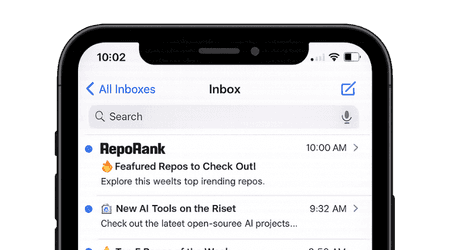
Get weekly Golang Frameworks repos in your inbox
Trending open-source projects, delivered weekly.
How Golang Frameworks Fit into Modern Backend Work
Golang has become one of the most widely used languages in modern backend engineering thanks to its simplicity, performance, concurrency model, and operational reliability. Open source Go repositories give developers a practical way to study how APIs, services, infrastructure tooling, and backend systems are built and maintained at scale.
The open source Go backend ecosystem includes API frameworks, microservice foundations, network services, backend utilities, infrastructure-oriented tooling, and production-ready repositories built for practical server-side development. RepoRank helps surface the repositories that are earning real attention and momentum.
What You Will Find Here
- Go backend frameworks, APIs, and service repositories
- Microservices, infrastructure-oriented tooling, and developer utilities
- Server-side architecture examples and production-ready projects
- Emerging Golang repositories gaining traction
This page helps you discover the Golang backend tools and repositories developers are actively using, evaluating, and watching across modern server-side development.
Why RepoRank Is Different
RepoRank focuses on real GitHub growth signals, helping you identify Go repositories that are active, relevant, and gaining adoption across backend engineering workflows.
- Live GitHub star growth and activity tracking
- A mix of established Go tooling and rising projects
- A discovery layer built for practical backend development
Built for Backend Developers and Platform Teams
Whether you are building APIs, evaluating Go frameworks, or tracking open source projects shaping modern server-side architecture, this page helps you stay close to the repositories gaining traction across backend development.
- Developers building APIs and backend services with Go
- Teams evaluating service architecture and infrastructure tooling
- Engineers tracking fast-moving open source Golang projects
Use this page to discover trending Golang repositories, compare backend tools, and stay current with the open source projects shaping modern server-side development.
Golang Frameworks FAQs
What is a Golang framework?
A Golang framework is a framework or structured toolkit that helps developers build web applications, APIs, or backend services in Go by providing routing, middleware, conventions, and related development support.
Do Go developers always need a framework?
No. Many Go developers prefer the standard library plus selected packages. Frameworks become more useful when teams want additional structure, faster setup, shared conventions, or tooling around common backend workflows.
How are Golang frameworks different from Go libraries?
A library usually solves one specific problem, while a framework provides broader structure and patterns for building an application or service.
What makes a good Golang framework?
A strong Go framework usually balances productivity with simplicity, aligns with idiomatic Go practices, performs well, and makes routing, middleware, validation, and project structure easier to manage.
Are Golang frameworks mainly for web apps and APIs?
Mostly, yes. They are especially common in HTTP services, APIs, and backend applications, though the broader ecosystem also supports other service-oriented workflows.
Why are Go frameworks often lighter than frameworks in some other languages?
Because Go culture values explicitness, strong standard library usage, and lower abstraction overhead. Many Go developers prefer frameworks that stay relatively close to those principles.
Should teams choose a framework or build directly on net/http?
It depends on the project. Smaller or simpler services may work well with standard tooling, while larger teams or more complex products may benefit from a framework’s conventions and ecosystem support.
What should teams compare when choosing a Go framework?
They should compare routing, middleware support, performance, ecosystem maturity, documentation, testing ergonomics, project structure conventions, and how idiomatic the framework feels in Go.
Are open source Golang frameworks production-ready?
Many are. Go has a strong open source backend ecosystem, and several widely used frameworks support serious production applications and APIs.
Why use RepoRank to explore Golang frameworks?
RepoRank helps developers discover Golang frameworks through open source relevance and practical builder value, making it easier to identify which Go projects are worth deeper evaluation.