



Smart Contract Projects
Explore smart contract projects across DeFi, NFTs, infrastructure, governance, identity, gaming, and onchain applications. Discover projects that show how developers use programmable contracts to build products, protocols, and digital ownership systems on blockchain networks.
Trending Web3 Repositories
just now- #1King of the HillWeb3C++
RepoRank Score
41
#1King of the HillWeb3C++ggml-org/whisper.cppggml-orgwhispercpp
Developeramuqeetk1Port of OpenAI's Whisper model in C/C++
51,831GitHub stars0boosts (24h)+23stars (24h)RepoRank Score
41
- #2Web3TypeScript
RepoRank Score
36
#2Web3TypeScriptTraderAlice/OpenAlicetraderaliceopenalice
DeveloperTraderaliceYour one-person Wall Street. An AI trading agent covering equities, crypto, commodities, forex, and macro — from research through position entry, ongoing management, to exit.
5,998GitHub stars0boosts (24h)+14stars (24h)RepoRank Score
36
- #3Web3TypeScript
RepoRank Score
30
#3Web3TypeScriptrecharts/rechartsrechartsrecharts
DeveloperRechartsRedefined chart library built with React and D3
27,363GitHub stars0boosts (24h)+6stars (24h)RepoRank Score
30
- #4Web3TypeScript
RepoRank Score
28
#4Web3TypeScriptlegions-developer/evilchartslegions-developerevilcharts
DeveloperLegions DeveloperEvilCharts is an open-source chart UI website built with shadcn and Recharts, beautifully designed and handcrafted.
2,630GitHub stars0boosts (24h)+6stars (24h)RepoRank Score
28
- #5Web3Python
RepoRank Score
23
#5Web3PythonJon-Becker/prediction-market-analysisjon-beckerprediction-market-analysis
DeveloperJon BeckerA framework for collecting and analyzing prediction market data, including the largest publicly available dataset of Polymarket and Kalshi market and trade data.
3,636GitHub stars0boosts (24h)+3stars (24h)RepoRank Score
23
- #6Web3Go
RepoRank Score
21
#6Web3GoC2SP/wycheproofc2spwycheproof
DeveloperC2spProject Wycheproof tests crypto libraries against known attacks.
3,087GitHub stars0boosts (24h)+1stars (24h)RepoRank Score
21
- #7Web3TypeScript
RepoRank Score
21
#7Web3TypeScriptpmxt-dev/pmxtpmxt-devpmxt
DeveloperPmxt DevCCXT for prediction markets. PMXT is a unified API for trading on Polymarket, Kalshi, and more.
1,973GitHub stars0boosts (24h)+0stars (24h)RepoRank Score
21
- #8Web3TypeScript
RepoRank Score
21
#8Web3TypeScriptEnrichfun/solclawenrichfunsolclaw
DeveloperAlgoatorgThe algo trading IDE for Solana memecoins. Live chart, order-book tape, token Nursery, AI assistant, paper trading. Open source.
24GitHub stars0boosts (24h)+4stars (24h)RepoRank Score
21
- #9Web3Rust
RepoRank Score
20
#9Web3Rustanza-xyz/agaveanza-xyzagave
DeveloperAnza XyzWeb-Scale Blockchain for fast, secure, scalable, decentralized apps and marketplaces.
1,841GitHub stars0boosts (24h)+0stars (24h)RepoRank Score
20
Recent blogs

Bull Markets Reward Attention. Weak Markets Reward Discovery.
Read the latest insights from the RepoRank editorial team.

The New Internet Economy For Builders
Read the latest insights from the RepoRank editorial team.
Stay Ahead
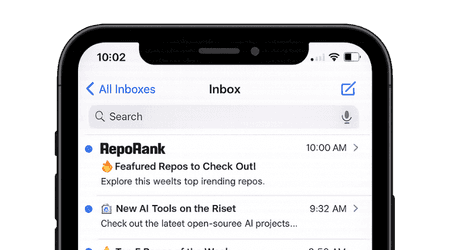
Get weekly Smart Contract Projects repos in your inbox
Trending open-source projects, delivered weekly.
Why Smart Contract Projects Matter
Smart contracts are at the core of modern Web3 development, powering decentralized applications, blockchain protocols, DeFi systems, and on-chain infrastructure. As the ecosystem evolves, developers rely on a growing set of tools for writing, testing, deploying, and interacting with smart contracts.
The open source Web3 tooling landscape includes Solidity frameworks, blockchain infrastructure, developer tooling, protocol utilities, and security-focused projects. RepoRank helps surface the repositories that are earning real attention and momentum.
What You Will Find Here
- Smart contract frameworks and Solidity tooling
- Blockchain infrastructure and on-chain developer tools
- DeFi, protocol, and contract workflow projects
- Emerging Web3 repositories gaining traction
This page helps you discover the tools Web3 developers are actively using, evaluating, and watching across the smart contract ecosystem.
Why RepoRank Is Different
RepoRank focuses on real GitHub growth signals, helping you identify smart contract and Web3 projects that are active, relevant, and gaining adoption.
- Live GitHub star growth and activity tracking
- A mix of established Web3 tooling and rising projects
- A discovery layer built for practical blockchain development
Built for Web3 Developers and Protocol Teams
Whether you are building decentralized apps, exploring Solidity tooling, or evaluating infrastructure for on-chain systems, this page helps you stay close to the projects shaping smart contract development.
- Developers building smart contracts and dApps
- Teams evaluating Solidity and blockchain tooling
- Engineers tracking fast-moving Web3 infrastructure
Use this page to discover trending smart contract repositories, compare tools, and stay current with the open source projects shaping Web3 development.
Smart Contract Projects FAQs
What is a smart contract project?
A smart contract project is a product, protocol, or infrastructure system built around blockchain-based contracts that execute predefined logic onchain.
Are smart contract projects only related to DeFi?
No. DeFi is one major category, but smart contract projects also appear in NFTs, governance, identity, gaming, token infrastructure, treasury systems, and many other onchain applications.
Why do developers study smart contract projects?
They provide real examples of security patterns, protocol design, upgrade strategies, token logic, user interaction models, and how onchain and offchain systems work together.
What should I evaluate when comparing smart contract projects?
Look at security design, contract architecture, upgradeability, documentation, audit history, economic model, composability, developer tooling, and whether the project solves a real onchain use case well.
How are smart contract projects different from traditional web apps?
Traditional web apps usually keep core business logic and data on centralized servers, while smart contract projects put important logic and state onchain where it can be verified and interacted with by external users and protocols.
Do smart contract projects always need a token?
Not always. Some do, especially when incentives, governance, or protocol coordination are involved, but not every contract-based product needs its own token to be useful.
Why is security such a big concern in smart contract projects?
Because contracts often manage assets or permissions directly, mistakes can be costly and difficult to reverse. Public execution and composability also increase the importance of careful design and testing.
Can smart contract projects include offchain components too?
Yes. Most real products combine onchain contracts with offchain interfaces, indexing, analytics, storage, APIs, and user-facing application layers.