



AI Agent Frameworks
AI agent frameworks are the foundation for building autonomous systems that can reason, plan, and act. From orchestrating LLM workflows to managing memory, tools, and multi-step execution, these frameworks make it possible to move beyond simple prompts into fully capable AI-driven applications. Whether you're building assistants, automation pipelines, or autonomous agents, choosing the right framework is a critical step.
Trending AI Repositories
just now- #1King of the HillAIPython
RepoRank Score
87
#1King of the HillAIPythonsafishamsi/graphifysafishamsigraphify
DeveloperGraphify LabsAI coding assistant skill (Claude Code, Codex, OpenCode, Cursor, Gemini CLI, and more). Turn any folder of code, SQL schemas, R scripts, shell scripts, docs, papers, images, or videos into a queryable knowledge graph. App code + database schema + infrastructure in one graph.
87,856GitHub stars0boosts (24h)+1,318stars (24h)RepoRank Score
87
- #2AITypeScript
RepoRank Score
86
#2AITypeScriptstablyai/orcastablyaiorca
DeveloperStablyaiOrca is the next-gen ADE for working with a fleet of parallel agents. Run any coding agent with your own subscription. Available on desktop and mobile.
20,014GitHub stars0boosts (24h)+770stars (24h)RepoRank Score
86
- #3AITypeScript
RepoRank Score
78
#3AITypeScriptnexu-io/open-designnexu-ioopen-design
DeveloperNexu Io🎨 Local-first, open-source alternative to Anthropic's Claude Design. ⚡ 19 Skills · ✨ 71 brand-grade Design Systems 🖼 Generate web · desktop · mobile prototypes · slides · images · videos · HyperFrames 📦 Sandboxed preview · HTML/PDF/PPTX/MP4 export 🤖 Runs on Claude Code / Codex / Cursor / Gemini / OpenCode / Qwen / Copilot / Hermes / Kimi CLI.
78,643GitHub stars0boosts (24h)+427stars (24h)RepoRank Score
78
- #4AITypeScript
RepoRank Score
54
#4AITypeScriptcolbymchenry/codegraphcolbymchenrycodegraph
DeveloperColbymchenryPre-indexed code knowledge graph for Claude Code, Codex, Cursor, and OpenCode — fewer tokens, fewer tool calls, 100% local
60,223GitHub stars0boosts (24h)+228stars (24h)RepoRank Score
54
- #5AITypeScript
RepoRank Score
51
#5AITypeScriptgarrytan/gstackgarrytangstack
DeveloperGarry TanUse Garry Tan's exact Claude Code setup: 23 opinionated tools that serve as CEO, Designer, Eng Manager, Release Manager, Doc Engineer, and QA
122,123GitHub stars0boosts (24h)+197stars (24h)RepoRank Score
51
- #6AIGo
RepoRank Score
50
#6AIGomultica-ai/multicamultica-aimultica
DeveloperMultica AiThe open-source managed agents platform. Turn coding agents into real teammates — assign tasks, track progress, compound skills.
40,663GitHub stars0boosts (24h)+193stars (24h)RepoRank Score
50
- #7AIJavaScript
RepoRank Score
42
#7AIJavaScriptsantifer/career-opssantifercareer-ops
DeveloperSantiferAI-powered job search system built on Claude Code. 14 skill modes, Go dashboard, PDF generation, batch processing.
60,260GitHub stars0boosts (24h)+122stars (24h)RepoRank Score
42
- #8AITypeScript
RepoRank Score
41
#8AITypeScriptruvnet/rufloruvnetruflo
DeveloperRuvnet🌊 The leading agent orchestration platform for Claude. Deploy intelligent multi-agent swarms, coordinate autonomous workflows, and build conversational AI systems. Features enterprise-grade architecture, self-learning swarm intelligence, RAG integration, and native Claude Code / Codex Integration
64,557GitHub stars0boosts (24h)+114stars (24h)RepoRank Score
41
- #9AIPython
RepoRank Score
41
#9AIPythonpewdiepie-archdaemon/odysseuspewdiepie-archdaemonodysseus
DeveloperOdysseus DevSelf-hosted AI workspace.
82,908GitHub stars0boosts (24h)+113stars (24h)RepoRank Score
41
Recent blogs

Bull Markets Reward Attention. Weak Markets Reward Discovery.
Read the latest insights from the RepoRank editorial team.

The New Internet Economy For Builders
Read the latest insights from the RepoRank editorial team.
Stay Ahead
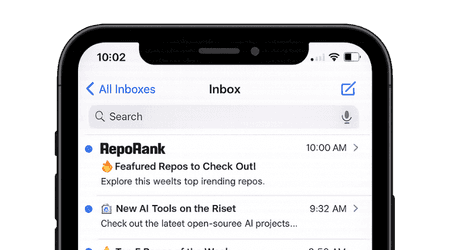
Get weekly AI Agent Frameworks repos in your inbox
Trending open-source projects, delivered weekly.
Understanding AI Agent Frameworks
AI agents have become one of the most active areas in applied artificial intelligence, combining models, memory, tools, reasoning loops, and external actions into systems that can complete more complex workflows. Open source repositories in this space are especially useful because they show how teams are building practical agent behavior into real products and experiments.
The open source AI agent ecosystem includes autonomous workflow systems, agent frameworks, multi-agent tooling, planning utilities, memory architectures, tool-use workflows, and broader repositories designed for applied AI automation. RepoRank helps surface the repositories that are earning real attention and momentum.
What You Will Find Here
- AI agent frameworks, task systems, and autonomous workflow repositories
- Memory, planning, and tool-use projects for applied AI automation
- Open source repositories built around practical agent behavior
- Emerging AI agent repositories gaining traction
This page helps you discover the AI agent projects developers, founders, and technical teams are actively using, evaluating, and watching.
Why RepoRank Is Different
RepoRank focuses on real GitHub growth signals, helping you identify AI agent repositories that are active, relevant, and gaining adoption across the fast-moving open source AI ecosystem.
- Live GitHub star growth and activity tracking
- A mix of established agent frameworks and rising projects
- A discovery layer built for practical AI development
Built for AI Developers, Builders, and Product Teams
Whether you are building autonomous workflows, evaluating agent frameworks, or tracking open source repositories that shape how AI systems act and reason, this page helps you stay close to the projects driving practical AI automation forward.
- Developers building agent-based apps and workflows
- Teams evaluating memory, reasoning, and tool-use architectures
- Engineers tracking fast-moving open source AI agent projects
Use this page to discover trending AI agent repositories, compare frameworks, and stay current with the open source projects shaping modern autonomous AI systems.
AI Agent Frameworks FAQs
What is an AI agent framework?
An AI agent framework is a toolkit that helps developers build systems where language models can reason through tasks, call tools, manage memory, and execute multi-step workflows. It adds orchestration and structure on top of raw model APIs.
How is an AI agent framework different from using an LLM API directly?
Using an LLM API directly gives you model access, but not the surrounding architecture for planning, tool use, retries, state management, or multi-step execution. Agent frameworks provide those building blocks so developers can create more capable and repeatable systems.
What features do developers usually look for in AI agent frameworks?
Common features include tool calling, memory layers, workflow orchestration, model routing, observability, retrieval support, multi-agent coordination, and support for human-in-the-loop review. The best choice depends on whether you are optimizing for speed, control, or production stability.
Are AI agent frameworks mainly for chatbots?
No. While some frameworks are used for conversational assistants, many are designed for broader agentic workflows such as research automation, code generation, task planning, document processing, internal copilots, and operational tooling. The category is much wider than chat interfaces.
What is the difference between an agent framework and an orchestration framework?
There is often overlap. Orchestration frameworks focus on structuring and managing model workflows, while agent frameworks usually add more autonomy, decision-making, looping behavior, and tool interaction. Some modern tools position themselves as both.
Do AI agent frameworks support multiple models and providers?
Many do. A strong framework often supports multiple LLM providers, embeddings backends, vector stores, and tool integrations, which gives teams flexibility as model quality, pricing, and latency change over time.
How important is memory in AI agent frameworks?
Memory is a major part of agent design. Frameworks may support short-term conversational memory, structured state, retrieval-based memory, or external storage for long-running tasks. Good memory handling often determines whether an agent feels coherent or unreliable.
When should a team avoid using a heavy AI agent framework?
If your product only needs a simple prompt-response flow, a full agent framework can add unnecessary complexity. Some teams start with lightweight orchestration or direct API usage, then adopt a framework later once tool use, memory, and observability become harder to manage manually.
Are open source AI agent frameworks good enough for production use?
Some are, but maturity varies. The best production candidates usually have active maintainers, strong documentation, clear abstractions, testing patterns, and real-world adoption. RepoRank is useful here because it helps surface frameworks that are showing genuine ecosystem traction.
How do I choose the right AI agent framework for my use case?
Start by looking at your actual requirements: tool use, memory, multi-step planning, observability, deployment model, and how much control you want over prompts and execution. Then compare frameworks based on ecosystem momentum, developer experience, and how closely their architecture matches the product you want to build.