



React UI Components
Explore React UI components for building application interfaces faster and with more consistency. Compare component libraries, headless primitives, design system building blocks, and reusable UI patterns used across modern React products.
Trending Frontend Repositories
just now- #1King of the HillFrontendHTML
RepoRank Score
73
#1King of the HillFrontendHTMLf/prompts.chatfpromptschat
DeveloperFf.k.a. Awesome ChatGPT Prompts. Share, discover, and collect prompts from the community. Free and open source — self-host for your organization with complete privacy.
165,823GitHub stars0boosts (24h)+81stars (24h)RepoRank Score
73
- #2FrontendZig
RepoRank Score
61
#2FrontendZigyuku-toolchain/yukuyuku-toolchainyuku
DeveloperYuku ToolchainHigh-performance JavaScript/TypeScript compiler toolchain in Zig.
770GitHub stars0boosts (24h)+34stars (24h)RepoRank Score
61
- #3FrontendTypeScript
RepoRank Score
36
#3FrontendTypeScripttldraw/tldrawtldrawtldraw
DeveloperTldrawvery good whiteboard infinite canvas SDK
48,777GitHub stars0boosts (24h)+9stars (24h)RepoRank Score
36
- #4Frontend
RepoRank Score
30
#4Frontendbrillout/awesome-react-componentsbrilloutawesome-react-components
DeveloperBrilloutCurated List of React Components & Libraries.
47,986GitHub stars0boosts (24h)+8stars (24h)RepoRank Score
30
- #5FrontendTypeScript
RepoRank Score
26
#5FrontendTypeScriptjnsahaj/tweakcnjnsahajtweakcn
DeveloperJnsahajA visual no-code theme editor for shadcn/ui components
10,170GitHub stars0boosts (24h)+3stars (24h)RepoRank Score
26
- #6FrontendGo
RepoRank Score
25
#6FrontendGoeverywall/laddereverywallladder
DeveloperEverywallSelfhosted alternative to 12ft.io. and 1ft.io. Proxy to remove CORS headers and modify HTML
8,711GitHub stars0boosts (24h)+4stars (24h)RepoRank Score
25
- #7FrontendMDX
RepoRank Score
22
#7FrontendMDXhunvreus/basecoathunvreusbasecoat
DeveloperHunvreusA components library built with Tailwind CSS that works with any web stack.
4,134GitHub stars0boosts (24h)+1stars (24h)RepoRank Score
22
- #8FrontendPython
RepoRank Score
22
#8FrontendPythonspipm/Depixelization_pocspipmdepixelizationpoc
DeveloperSpipmDepix is a PoC for a technique to recover plaintext from pixelized screenshots.
4,550GitHub stars0boosts (24h)+1stars (24h)RepoRank Score
22
- #9FrontendPython
RepoRank Score
22
#9FrontendPythonferdous-alam/GenCADferdous-alamgencad
DeveloperFerdous AlamImage-conditioned Computer-Aided Design Generation with Transformer-based Contrastive Representation and Diffusion Priors
3,595GitHub stars0boosts (24h)+2stars (24h)RepoRank Score
22
Recent blogs

Bull Markets Reward Attention. Weak Markets Reward Discovery.
Read the latest insights from the RepoRank editorial team.

The New Internet Economy For Builders
Read the latest insights from the RepoRank editorial team.
Stay Ahead
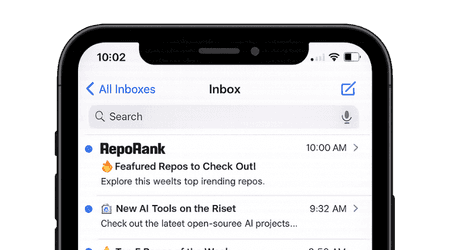
Get weekly React UI Components repos in your inbox
Trending open-source projects, delivered weekly.
How React UI Components Fit Into Modern Frontend Work
UI components are a core layer of modern frontend development, giving teams reusable building blocks for interfaces, design consistency, accessibility, and faster product iteration. Open source component repositories help developers study real implementation patterns and discover systems that make interface development more efficient.
The open source UI component ecosystem includes component libraries, headless UI foundations, design systems, accessibility-focused tooling, styling integrations, and broader frontend repositories built around reusable interface architecture. RepoRank helps surface the repositories that are earning real attention and momentum.
What You Will Find Here
- Reusable UI component libraries and interface foundations
- Design systems, headless UI kits, and accessibility-focused projects
- Frontend repositories built to accelerate interface development
- Emerging UI component repositories gaining traction
This page helps you discover the UI component projects frontend developers and design system teams are actively using, evaluating, and watching.
Why RepoRank Is Different
RepoRank focuses on real GitHub growth signals, helping you identify UI component repositories that are active, relevant, and gaining adoption across frontend and product design workflows.
- Live GitHub star growth and activity tracking
- A mix of established interface systems and rising projects
- A discovery layer built for practical frontend development
Built for Frontend Developers and Design System Teams
Whether you are building a product UI, choosing a reusable component foundation, or tracking open source repositories that shape modern interface development, this page helps you stay close to the projects gaining traction across frontend engineering.
- Frontend developers building consistent interfaces
- Design system teams evaluating reusable component foundations
- Engineers tracking fast-moving open source UI component projects
Use this page to discover trending UI component repositories, compare libraries, and stay current with the open source projects shaping modern frontend interfaces.
React UI Components FAQs
What are React UI components?
React UI components are reusable interface elements built for React applications, such as buttons, forms, dialogs, menus, tables, navigation patterns, and other building blocks used to create consistent user interfaces.
How are component libraries different from headless UI tools?
Component libraries often include styling and ready-made visuals, while headless UI tools focus on behavior, structure, and accessibility, leaving design and styling decisions to the developer.
Why do teams use shared React UI components?
They improve consistency, reduce duplicated work, support accessibility more reliably, and make it easier to scale frontend development across teams and product surfaces.
What should I evaluate when choosing React UI components?
Look at accessibility, customization, design flexibility, maintenance quality, theming support, documentation, performance, and how well the components fit your product and team workflow.
Are React UI components only useful for large design systems?
No. Even smaller projects benefit from reusable components because they speed up UI work and reduce inconsistency, though large teams tend to feel the value more strongly over time.
Can React UI components work with custom styling systems?
Yes. Many component approaches are designed to integrate with custom CSS, utility-first systems, CSS-in-JS, or broader design tokens depending on how much control a team wants.
Do React UI components solve accessibility automatically?
Not always. Good components can make accessibility much easier, but teams still need to choose libraries carefully and apply them thoughtfully within real application flows.
What is the difference between a component kit and a design system?
A component kit is usually a collection of reusable UI pieces, while a design system is broader and includes principles, tokens, usage rules, patterns, accessibility standards, and the process for maintaining consistency across a product.