



CSS Animations
CSS animations help developers create motion, feedback, transitions, and polished interface behavior directly in the browser without relying entirely on JavaScript-heavy animation systems. From hover effects and loading states to UI microinteractions, scroll-linked movement, and performance-friendly motion patterns, CSS animation techniques remain an important part of frontend design and development. Whether you are building product interfaces, marketing pages, dashboards, or design systems, strong animation patterns can improve both feel and usability.
Trending Frontend Repositories
just now- #1King of the HillFrontendHTML
RepoRank Score
73
#1King of the HillFrontendHTMLf/prompts.chatfpromptschat
DeveloperFf.k.a. Awesome ChatGPT Prompts. Share, discover, and collect prompts from the community. Free and open source — self-host for your organization with complete privacy.
165,823GitHub stars0boosts (24h)+81stars (24h)RepoRank Score
73
- #2FrontendZig
RepoRank Score
61
#2FrontendZigyuku-toolchain/yukuyuku-toolchainyuku
DeveloperYuku ToolchainHigh-performance JavaScript/TypeScript compiler toolchain in Zig.
770GitHub stars0boosts (24h)+34stars (24h)RepoRank Score
61
- #3FrontendTypeScript
RepoRank Score
36
#3FrontendTypeScripttldraw/tldrawtldrawtldraw
DeveloperTldrawvery good whiteboard infinite canvas SDK
48,777GitHub stars0boosts (24h)+9stars (24h)RepoRank Score
36
- #4Frontend
RepoRank Score
30
#4Frontendbrillout/awesome-react-componentsbrilloutawesome-react-components
DeveloperBrilloutCurated List of React Components & Libraries.
47,986GitHub stars0boosts (24h)+8stars (24h)RepoRank Score
30
- #5FrontendTypeScript
RepoRank Score
26
#5FrontendTypeScriptjnsahaj/tweakcnjnsahajtweakcn
DeveloperJnsahajA visual no-code theme editor for shadcn/ui components
10,170GitHub stars0boosts (24h)+3stars (24h)RepoRank Score
26
- #6FrontendGo
RepoRank Score
25
#6FrontendGoeverywall/laddereverywallladder
DeveloperEverywallSelfhosted alternative to 12ft.io. and 1ft.io. Proxy to remove CORS headers and modify HTML
8,711GitHub stars0boosts (24h)+4stars (24h)RepoRank Score
25
- #7FrontendMDX
RepoRank Score
22
#7FrontendMDXhunvreus/basecoathunvreusbasecoat
DeveloperHunvreusA components library built with Tailwind CSS that works with any web stack.
4,134GitHub stars0boosts (24h)+1stars (24h)RepoRank Score
22
- #8FrontendPython
RepoRank Score
22
#8FrontendPythonspipm/Depixelization_pocspipmdepixelizationpoc
DeveloperSpipmDepix is a PoC for a technique to recover plaintext from pixelized screenshots.
4,550GitHub stars0boosts (24h)+1stars (24h)RepoRank Score
22
- #9FrontendPython
RepoRank Score
22
#9FrontendPythonferdous-alam/GenCADferdous-alamgencad
DeveloperFerdous AlamImage-conditioned Computer-Aided Design Generation with Transformer-based Contrastive Representation and Diffusion Priors
3,595GitHub stars0boosts (24h)+2stars (24h)RepoRank Score
22
Recent blogs

Bull Markets Reward Attention. Weak Markets Reward Discovery.
Read the latest insights from the RepoRank editorial team.

The New Internet Economy For Builders
Read the latest insights from the RepoRank editorial team.
Stay Ahead
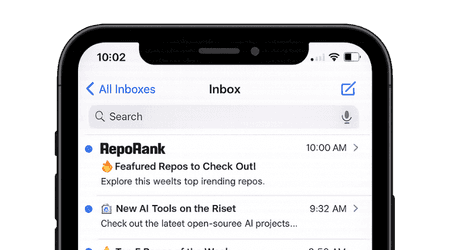
Get weekly CSS Animations repos in your inbox
Trending open-source projects, delivered weekly.
Why CSS Animations Still Matter in Frontend Work
UI animations play an important role in modern frontend development by improving clarity, perceived responsiveness, and the overall feel of digital products. Open source repositories in this space help developers and designers explore practical ways to build transitions, gestures, motion systems, and polished interface interactions.
The open source UI animation ecosystem includes motion libraries, transition frameworks, interaction utilities, gesture systems, micro-interaction projects, and broader repositories designed to support expressive and maintainable frontend experiences. RepoRank helps surface the repositories that are earning real attention and momentum.
What You Will Find Here
- Motion libraries, transition systems, and gesture-driven UI tools
- Micro-interaction frameworks and expressive interface animation projects
- Open source repositories built to improve modern frontend experiences
- Emerging UI animation repositories gaining traction
This page helps you discover the UI animation tools frontend developers and design-focused teams are actively using, evaluating, and watching.
Why RepoRank Is Different
RepoRank focuses on real GitHub growth signals, helping you identify UI animation repositories that are active, relevant, and gaining adoption across frontend and interaction design workflows.
- Live GitHub star growth and activity tracking
- A mix of established motion systems and rising projects
- A discovery layer built for practical frontend development
Built for Frontend Developers and Design System Teams
Whether you are improving interface polish, evaluating motion libraries, or tracking open source repositories that shape modern interaction design, this page helps you stay close to the projects driving expressive frontend experiences forward.
- Frontend developers building polished product interfaces
- Design system teams evaluating motion and transition foundations
- Organizations tracking fast-moving open source UI animation projects
Use this page to discover trending UI animation repositories, compare tools, and stay current with the open source projects shaping modern interface motion and interaction design.
CSS Animations FAQs
What are CSS animations?
CSS animations are motion and transition effects created using CSS features such as transitions, keyframes, transforms, timing functions, and animation properties.
How are CSS animations different from JavaScript animations?
CSS animations are handled at the styling layer and are often simpler to implement for many UI effects, while JavaScript animations usually provide more control for complex, stateful, or physics-driven motion.
Are CSS animations still useful in modern frontend apps?
Yes. They remain highly useful for transitions, hover states, microinteractions, loading cues, and many interface behaviors that benefit from lightweight motion.
Can CSS animations affect performance?
Yes. Well-implemented CSS animations can be very efficient, especially when using performant properties like transforms and opacity, but poor animation choices can still hurt performance.
Do CSS animations help usability or are they just visual polish?
They can do both. Good motion can guide attention, clarify state changes, and improve perceived responsiveness, while still contributing to the overall feel of an interface.
What is the difference between CSS transitions and CSS animations?
Transitions usually animate changes between states, while CSS animations using keyframes can define more complex multi-step motion sequences.
Should teams worry about accessibility with CSS animations?
Yes. Motion should be used thoughtfully and respect reduced-motion preferences when appropriate, especially for users who may be sensitive to excessive or unexpected animation.
Are there open source tools and libraries for CSS animations?
Absolutely. Many open source libraries, examples, and utility projects help developers create or adapt CSS-based motion patterns more quickly.
When should developers choose CSS animation over a heavier motion framework?
CSS animation is often a strong choice when the desired motion is relatively simple, interface-oriented, and does not require advanced runtime coordination or complex sequencing.
Why use RepoRank to explore CSS animation resources?
RepoRank helps developers discover CSS animation projects and tools through open source relevance and practical frontend interest, making it easier to find motion resources worth using.