



AutoHedge Packages Autonomous Trading as a Four-Agent Open-Source Stack
Read the latest insights from the RepoRank editorial team.
API testing tools help developers verify that APIs behave as expected across development, staging, and production workflows. From request inspection and contract validation to automated testing, mocking, load checks, and collaborative debugging, these tools are essential for building reliable backend and integration-heavy systems. This cluster is designed for developers exploring the tooling ecosystem around API testing, whether they are working with REST, GraphQL, internal services, or public-facing developer platforms.
Read the latest insights from the RepoRank editorial team.

Read the latest insights from the RepoRank editorial team.

Read the latest insights from the RepoRank editorial team.
Trending open-source projects, delivered weekly.
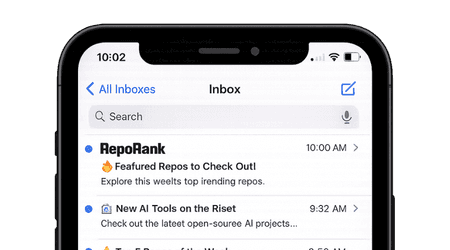
API tools are a core part of modern developer workflows, helping engineers design, test, document, explore, and integrate services more efficiently. Open source repositories in this space are especially valuable because they reveal practical approaches to working with requests, schemas, endpoints, and service contracts across product teams.
The open source API tooling ecosystem includes API clients, documentation systems, schema utilities, request builders, integration helpers, and broader repositories designed to improve developer productivity when building with services and interfaces. RepoRank helps surface the repositories that are earning real attention and momentum.
This page helps you discover the API tools developers and engineering teams are actively using, evaluating, and watching across modern software workflows.
RepoRank focuses on real GitHub growth signals, helping you identify API tool repositories that are active, relevant, and gaining adoption across developer productivity and integration workflows.
Whether you are exploring APIs, improving service documentation, or tracking open source repositories that make API workflows easier during development, this page helps you stay close to the projects shaping modern developer productivity.
Use this page to discover trending API tool repositories, compare workflows, and stay current with the open source projects shaping modern developer integration and service design.
API testing tools are developer tools used to validate, inspect, automate, and monitor API behavior. They help confirm that endpoints return the correct data, handle failures properly, and remain stable across development and deployment workflows.
Some tools do both, but the difference is intent. An API client helps you send requests and inspect responses, while API testing tools go further by supporting assertions, automation, mocking, schema validation, contract checks, and repeatable test workflows.
Because APIs are a major source of product risk. Changes to payloads, auth, rate limits, error handling, or timing can break dependent systems. Dedicated testing tools help teams catch those issues earlier and make backend changes with more confidence.
No. Internal APIs, microservices, and private platform endpoints often need strong testing even more because they support multiple internal consumers and fast release cycles. The need for validation is not limited to public developer-facing APIs.
Depending on the tool, they can support functional testing, regression testing, contract validation, schema checks, mock-based testing, load testing, performance testing, authentication workflows, and automated checks in CI pipelines.
Yes. Many API testing tools now support multiple API styles, including REST, GraphQL, and sometimes gRPC or event-driven workflows. The exact support varies, but the broader category is no longer limited to classic REST endpoint testing.
API testing is the broader category. Contract testing focuses specifically on verifying that the interface between systems remains consistent, such as request and response shapes or agreed interaction patterns. Contract testing is one important part of a wider API testing strategy.
Absolutely. Many open source API testing tools are powerful, scriptable, and well suited to team workflows. The key is choosing tools that fit your environment, whether you prioritize local debugging, automation, collaboration, performance checks, or schema-driven reliability.
Important factors include ease of use, automation support, collaboration features, protocol support, mocking capability, CI integration, schema validation, test readability, and how well the tool fits existing developer workflows.
RepoRank helps developers discover API testing tools through the lens of real open source momentum and developer relevance. That makes it easier to find practical tools worth evaluating instead of relying on a narrow shortlist or defaulting to the loudest brand.