



iOS Projects
iOS projects show how developers build native Apple-platform apps, interfaces, and mobile product experiences across real open source repositories. From SwiftUI demos and UIKit-based apps to architecture samples, starter apps, libraries, and production-style codebases, these projects reveal how iOS development works in practice beyond isolated tutorials. Whether you are learning native mobile development, comparing app structure patterns, or looking for open source repos worth studying, strong iOS projects provide useful real-world examples.
Trending Mobile Repositories
just now- #1King of the HillMobileTypeScript
RepoRank Score
56
#1King of the HillMobileTypeScriptrmyndharis/OpenWArmyndharisopenwa
DeveloperRmyndharisFree, Open Source, Self-Hosted WhatsApp API Gateway
11,333GitHub stars0boosts (24h)+41stars (24h)RepoRank Score
56
- #2MobileKotlin
RepoRank Score
8
#2MobileKotlinprojectNEWM/newm-mobileprojectnewmnewm-mobile
DeveloperProjectnewmRepo for the Android and iOS mobile apps utilizing a Kotlin Multiplatform Mobile (KMM) shared module to share business logic.
23GitHub stars0boosts (24h)+0stars (24h)RepoRank Score
8
- #3MobileTypeScript
RepoRank Score
2
#3MobileTypeScriptMobxglobal/mobx-backendmobxglobalmobx-backend
DeveloperAlex AttingerNo description yet.
1GitHub stars0boosts (24h)+0stars (24h)RepoRank Score
2
Recent blogs

Bull Markets Reward Attention. Weak Markets Reward Discovery.
Read the latest insights from the RepoRank editorial team.

The New Internet Economy For Builders
Read the latest insights from the RepoRank editorial team.
Stay Ahead
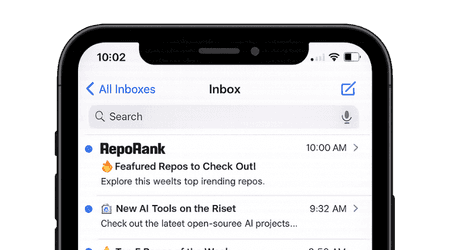
Get weekly iOS Projects repos in your inbox
Trending open-source projects, delivered weekly.
Why iOS Projects Are Useful for Developers
iOS development continues to evolve with a rich ecosystem of frameworks, libraries, and developer tools built around Swift, UIKit, SwiftUI, and broader Apple platform workflows. Strong tooling can improve developer experience, speed up delivery, and raise app quality.
The open source iOS ecosystem includes UI frameworks, networking libraries, mobile infrastructure tools, testing projects, and utilities that help developers build better apps. RepoRank helps surface the iOS repositories gaining real traction.
What You Will Find Here
- Swift frameworks and iOS developer libraries
- UI, animation, and app experience tooling
- Mobile infrastructure, testing, and workflow tools
- Emerging iOS repositories gaining traction
This page helps you discover the iOS tools developers are actively using, evaluating, and watching across the Apple ecosystem.
Why RepoRank Is Different
RepoRank uses real GitHub growth signals to highlight iOS projects that are active and gaining momentum, rather than relying on static roundups or outdated app-dev lists.
- Live GitHub star growth and activity tracking
- A mix of established Swift tools and rising projects
- A discovery layer built for practical mobile workflows
Built for iOS Developers and Mobile Teams
Whether you are shipping Swift apps, exploring new frameworks, or improving your iOS development workflow, this page helps you stay close to the tools shaping modern Apple-platform development.
- iOS engineers building Swift applications
- Mobile developers exploring new frameworks and tools
- Teams evaluating modern iOS infrastructure and libraries
Use this page to discover trending iOS repositories, compare tools, and stay current with the projects shaping mobile development.
iOS Projects FAQs
What counts as an iOS project?
An iOS project can be a full app, a starter template, a UI showcase, an architecture sample, or any open source repository built for native iPhone and Apple-platform development.
Why should developers study open source iOS projects?
Because real repositories show how iOS apps are actually structured, including navigation, state handling, API usage, screen organization, and architecture decisions across complete codebases.
Are iOS projects only useful for beginners?
No. Beginners can learn fundamentals from them, but experienced developers also use them to compare architecture patterns, evaluate modern SwiftUI usage, and discover implementation ideas worth adapting.
What makes a strong iOS GitHub project?
Useful signals include clear documentation, modern native development practices, understandable structure, maintainability, and examples that reflect realistic mobile workflows rather than only demo-level code.
Do iOS projects usually use Swift now?
Yes. Most modern iOS projects are Swift-based, and many newer repositories also make heavy use of SwiftUI, though UIKit remains important in many existing and hybrid codebases.
Can iOS projects help with learning SwiftUI?
Absolutely. Open source projects are one of the best ways to see how SwiftUI is used in complete applications rather than isolated tutorials or component snippets.
What is the difference between an iOS project and an iOS library?
An iOS project usually refers to a full application or broader repository, while a library is typically a reusable package intended to be used inside other apps.
Are open source iOS projects production-ready?
Some are, but quality varies. Many are excellent for learning or architecture comparison, while others are mature enough to serve as serious production references.
How can iOS projects help when planning a new app?
They can reveal architecture patterns, package choices, UI strategies, navigation flows, and implementation details that help teams make better technical decisions early.
Why use RepoRank to explore iOS projects?
RepoRank helps developers discover iOS repositories through open source relevance and practical builder value, making it easier to find projects worth following or studying.